Science & Pipeline
The complexity of the tumor microenvironment is composed of a synergistic immunosuppressive triad
To sustain growth, tumors need blood vessels for oxygen and nutrients —and they exploit
lymphatic vessels to spread. By targeting key drivers of fibrosis, angiogenesis and lymphangiogenesis with safe bispecific antibodies, we can deprive tumors of their ability to grow and metastasize.
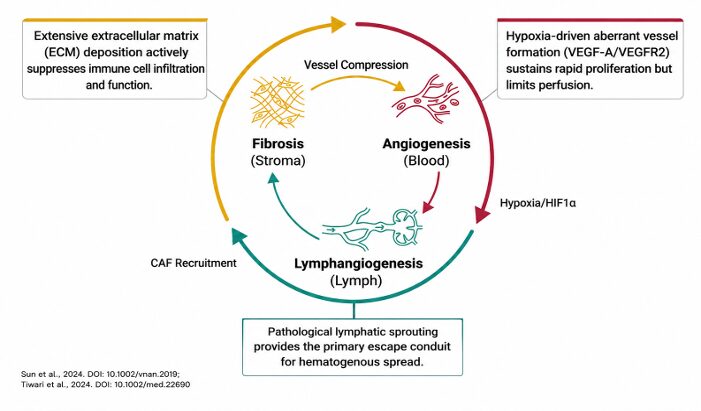
Immunosuppressive drivers of TME
Novel Multimodal Approach
Focused on LVRF and PD1 to specifically and selectively address critical drivers of tumor metastasis and overcome treatment resistance
Current anti-PD1/anti VEGF regimes leave lymphatic and fibrotic escape routes unaddressed:
- Approved combinations block VEGF-A and PD1 but fail to inhibit VEGF-C/D/VEGFR3-NRP2 lymphangiogenic axis
- Tumors with elevated VEGF-C utilize lymphatic vessels as dominant metastatic conduits
- Lymphatic endothelial cells and fibrotic storm actively suppress T-cell penetration
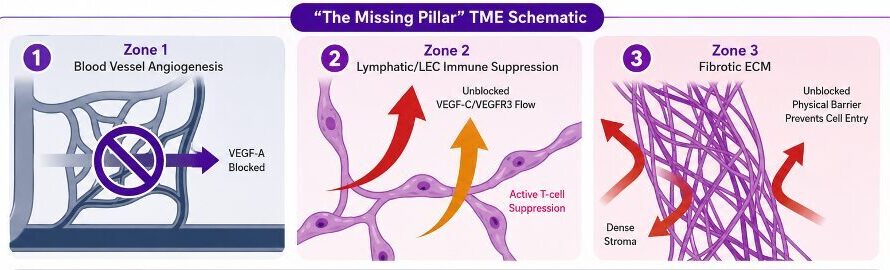
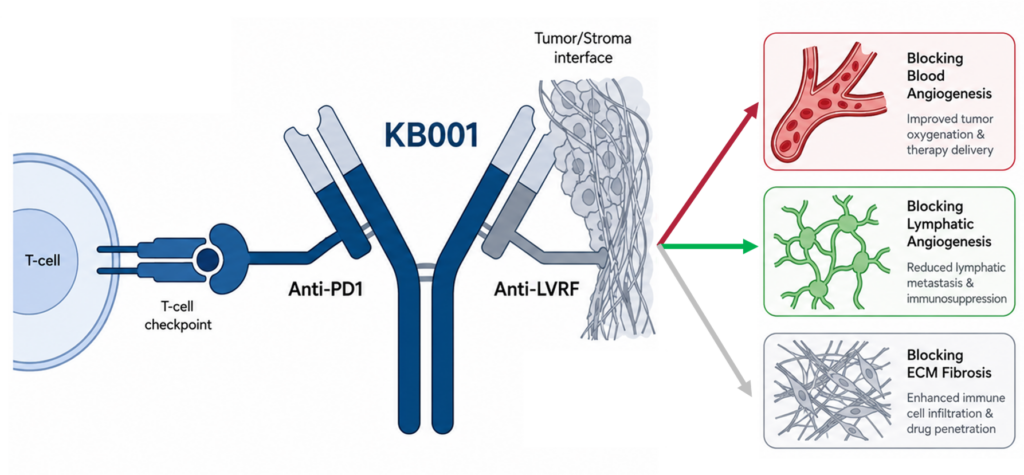
Lyvepodimab (KB001) takes a specific trimodal TME normalization approach to address the root-cause of treatment resistance and tumor metastasis
Pipeline
Lyvepodimab (KB001)
Target LVRF + PD1
MoA Vascular angiogenesis
+ Lymphatic angiogenesis
+ Tumor proliferation
+ Fibrosis
+ Lymphatic angiogenesis
+ Tumor proliferation
+ Fibrosis
Indications Triple Negative Breast Cancer
In vitro PoC
In vivo PoC
Humanization